Introduction
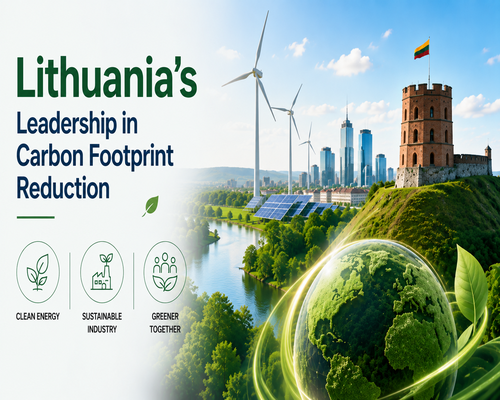
Lithuania has emerged as one of Europe’s most successful countries in reducing greenhouse gas emissions and transitioning toward a sustainable, low-carbon economy. Since gaining independence in the early 1990s, the country has undergone a remarkable transformation in its energy, industrial, and environmental sectors. Through strategic policy reforms, investments in renewable energy, improved energy efficiency, and sustainable land management practices, Lithuania has achieved one of the largest carbon footprint reductions among European Union member states. As climate change continues to be one of the most pressing global challenges, Lithuania’s experience provides valuable lessons for countries seeking to balance economic growth, energy security, and environmental responsibility.
Lithuania’s Carbon Reduction Achievement
Lithuania has reduced its greenhouse gas emissions by more than 60% compared to 1990 levels, making it one of the leading performers within the European Union. This achievement is particularly significant considering the country’s economic growth and modernization during the same period. The reduction has been driven by structural changes in the economy, modernization of industries, improved energy systems, and increasing adoption of renewable energy technologies.
The country’s commitment to climate action aligns closely with European Union climate policies and international agreements such as the Paris Agreement. Lithuania has established ambitious goals to further reduce emissions and achieve climate neutrality by 2050, reinforcing its position as a leader in environmental sustainability.
Transformation of the Energy Sector
One of the primary reasons behind Lithuania’s carbon footprint reduction has been the transformation of its energy sector. Historically, the country relied heavily on imported fossil fuels and aging energy infrastructure. Over the past three decades, substantial investments have been made to modernize energy production and distribution systems.
The government has prioritized reducing dependence on carbon-intensive fuels while improving energy security. As a result, emissions from energy generation have declined significantly. Modern power generation facilities, enhanced grid infrastructure, and increased use of cleaner energy sources have all contributed to lowering the carbon intensity of the energy sector.
Energy security has become particularly important in recent years due to geopolitical developments in Eastern Europe. Lithuania has accelerated efforts to diversify energy sources, reducing vulnerability to external supply disruptions while simultaneously supporting decarbonization objectives.
Expansion of Renewable Energy
Renewable energy has become a cornerstone of Lithuania’s climate strategy. Wind, solar, and bioenergy are playing increasingly important roles in the country’s energy mix. Lithuania has set ambitious targets for renewable energy deployment and aims to generate all of its electricity from renewable sources in the coming decades.
Wind energy has experienced substantial growth, with both onshore and planned offshore projects contributing to increased renewable electricity production. Solar energy installations have expanded rapidly as technological costs have decreased and government incentives have encouraged investment. Community solar projects and distributed generation systems are also gaining popularity among households and businesses.
Bioenergy remains an important component of Lithuania’s renewable portfolio, particularly in district heating systems. The use of sustainably sourced biomass has helped reduce reliance on imported fossil fuels while supporting rural economic development.
The growth of renewable energy not only reduces greenhouse gas emissions but also strengthens energy independence, creates employment opportunities, and supports long-term economic resilience.
Government Policies Driving Decarbonization
Lithuania’s success in reducing carbon footprint emissions has been strongly supported by government policies and regulatory frameworks. The country has developed comprehensive climate and energy strategies that provide clear direction for businesses, investors, and citizens.
National climate policies focus on reducing emissions across all sectors of the economy, including energy, transportation, industry, agriculture, and buildings. Financial incentives encourage investment in renewable energy projects, energy-efficient technologies, and sustainable infrastructure.
The government has also aligned its climate goals with the European Green Deal, which seeks to make Europe the first climate-neutral continent by 2050. Access to European Union funding has enabled Lithuania to accelerate investments in clean technologies, infrastructure modernization, and environmental protection initiatives.
Carbon pricing mechanisms and environmental regulations further support the transition by encouraging industries to adopt cleaner production processes and reduce their environmental impact.
Energy Efficiency Improvements
Improving energy efficiency has been another critical component of Lithuania’s carbon reduction strategy. The country has implemented extensive programs aimed at reducing energy consumption across residential, commercial, and industrial sectors.
Many older residential buildings have undergone energy-efficient renovations, including improved insulation, replacement of windows, and modernization of heating systems. These upgrades have significantly reduced energy consumption and associated emissions while lowering utility costs for residents.
Industrial facilities have adopted advanced manufacturing technologies and cleaner production methods that require less energy and generate fewer emissions. Businesses are increasingly investing in energy management systems, efficient equipment, and digital technologies to optimize operations.
Public awareness campaigns have also encouraged consumers to adopt energy-saving practices, contributing to nationwide reductions in energy demand.
The Role of Forests and Natural Carbon Sinks
Lithuania’s extensive forests play a vital role in reducing the country’s carbon footprint. Forests act as natural carbon sinks, absorbing carbon dioxide from the atmosphere and storing it in vegetation and soil.
Over the years, Lithuania has expanded forest coverage and implemented sustainable forestry practices to enhance carbon footprint sequestration capacity. Careful forest management ensures that timber production, biodiversity conservation, and climate objectives can be achieved simultaneously.
Nature-based solutions, including forest conservation, afforestation, and ecosystem restoration, have become increasingly important components of Lithuania’s climate strategy. These measures help offset emissions from sectors that are more difficult to decarbonize while providing additional environmental benefits such as improved biodiversity and water management.
Challenges in Transportation and Agriculture
Despite its impressive achievements, Lithuania still faces challenges in further reducing its carbon footprint. Transportation remains the largest source of greenhouse gas emissions in the country. Increased vehicle ownership and continued dependence on fossil-fuel-powered transportation contribute significantly to national emissions.
To address this challenge, Lithuania is investing in electric vehicle infrastructure, public transportation improvements, and alternative fuels. Policies encouraging the adoption of electric vehicles and sustainable mobility solutions are expected to play an increasingly important role in future emission reductions.
Agriculture is another sector that presents challenges. Methane emissions from livestock and nitrous oxide emissions from fertilizer use contribute significantly to greenhouse gas emissions. The adoption of precision farming techniques, sustainable agricultural practices, and innovative technologies will be essential for reducing emissions while maintaining agricultural productivity.
Innovation and Future Opportunities
Innovation is expected to play a crucial role in Lithuania’s continued progress toward climate neutrality. The country is investing in emerging technologies such as hydrogen production, energy storage systems, smart grids, and digital energy management solutions.
Research institutions, universities, and private companies are collaborating to develop innovative approaches to decarbonization. European Union funding programs provide additional support for clean technology development and deployment.
The growing green economy is creating opportunities for new businesses, skilled employment, and sustainable industrial growth. As technology advances and costs continue to decline, Lithuania is well-positioned to further accelerate its transition to a low-carbon future.
Conclusion
Lithuania’s journey toward carbon footprint reduction demonstrates how determined policy action, technological innovation, renewable energy investment, and sustainable resource management can drive significant environmental progress. By reducing greenhouse gas emissions by more than 60% since 1990, the country has established itself as one of Europe’s leading examples of successful climate action.
The transformation of the energy sector, expansion of renewable energy, improvements in energy efficiency, and protection of natural carbon sinks have all contributed to this achievement. While challenges remain in transportation and agriculture, Lithuania’s ambitious climate targets and ongoing investments provide a strong foundation for future success.
As countries around the world seek effective strategies for combating climate change, Lithuania offers a compelling example of how environmental sustainability, energy security, and economic development can be successfully integrated. Its experience highlights the importance of long-term planning, strong policy commitment, and continuous innovation in building a cleaner and more resilient future.