The Carbon Footprint of a power generation company includes emissions associated with the generation, transmission, distribution, and supporting activities of the business. The emissions profile varies significantly depending on the energy source and operational model.
The power and electricity generation industry is at the center of the global effort to address climate change. As electricity demand continues to grow due to industrialization, urbanization, digitalization, and electrification of transportation, the sector faces increasing pressure to reduce Carbon Emissions while ensuring reliable, affordable, and accessible energy.
Historically, coal- and gas-based power generation has been a major source of greenhouse gas emissions. However, the industry is now undergoing a fundamental Energy Transition, driven by Renewable Energy, technological innovation, energy efficiency, and stronger environmental regulations. For power generation companies, Carbon Footprint Reduction is no longer simply an environmental objective it is becoming an important business priority linked to competitiveness, investment, regulatory compliance, and long-term resilience.
The Carbon Reduction Hierarchy provides a structured approach for organizations to address their greenhouse gas emissions systematically. It begins with Measure, where organizations quantify and understand their carbon footprint and identify major emission sources. Avoid focuses on preventing unnecessary emissions through better planning, efficient processes, and sustainable choices. Reduce involves lowering existing emissions through energy efficiency, resource conservation, process improvements, and operational changes. Replace encourages the transition from high-carbon energy sources, materials, and technologies to cleaner alternatives such as renewable energy and low-carbon fuels. Optimize focuses on continuously improving operations, systems, and resource use to achieve maximum carbon efficiency. Where emissions cannot be eliminated, Remove involves solutions that physically remove carbon dioxide from the atmosphere, while Compensate addresses unavoidable residual emissions through credible carbon offset or carbon credit mechanisms. Together, these steps create a practical pathway toward deep decarbonization and long-term net-zero goals.
Understanding the Carbon Footprint of Power Generation
Coal-fired power plants generally have a higher carbon intensity because coal combustion produces significant amounts of carbon dioxide. Natural gas generation typically has lower direct emissions than coal, but methane leakage throughout the gas supply chain can add substantially to its overall climate impact. Renewable sources such as solar, wind, and hydropower generally have much lower lifecycle emissions, although their manufacturing, transportation, construction, and maintenance activities still generate some emissions.
Power companies must therefore assess their emissions across Scope 1 Direct Emissions, Scope 2 Indirect Emissions, and Scope 3 Other Emissions.
Scope 1 Emissions primarily arise from direct fuel combustion in power plants, stationary equipment, company-owned vehicles, and other operations. For fossil-fuel-based generators, these emissions usually represent the largest share of their carbon footprint.
Scope 2 Emissions are associated with purchased electricity, heating, cooling, or steam consumed by the organization. Although power generators produce electricity themselves, their corporate offices, facilities, and auxiliary operations may still consume purchased energy.
Scope 3 Emissions cover indirect emissions throughout the broader value chain. These can include fuel extraction and transportation, purchased goods and services, capital equipment, employee commuting, business travel, waste, and the use or distribution of energy products. For many organizations, addressing these indirect emissions is becoming an increasingly important part of climate strategy.
Renewable Energy as a Key Decarbonization Pathway
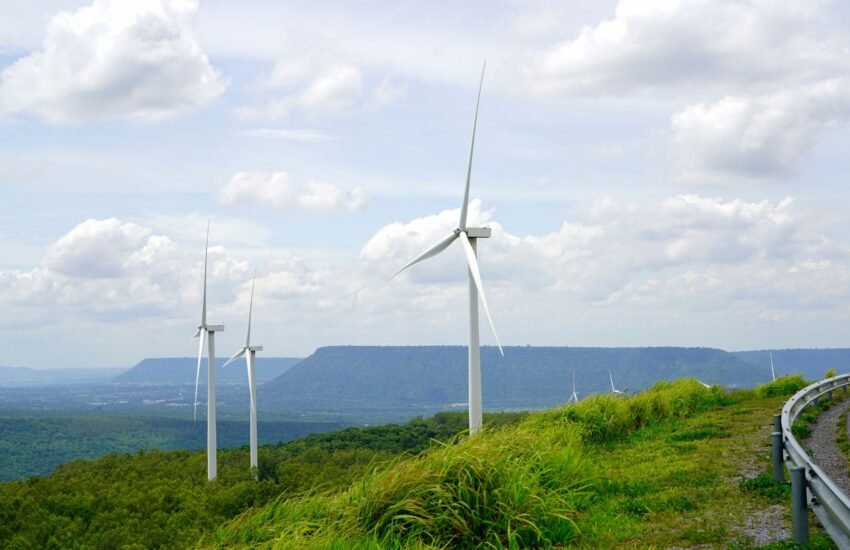
The expansion of Renewable Energy is one of the most important strategies for reducing emissions in the electricity sector. Solar, wind, hydropower, geothermal, and other renewable technologies can significantly reduce dependence on fossil fuels.
Power generation companies can invest directly in renewable power plants or enter into long-term power purchase agreements to secure Clean Energy. Hybrid renewable projects combining solar and wind can improve generation consistency, while battery energy storage systems can help address intermittency and improve grid stability.
The transition toward renewable power is also creating opportunities for traditional utilities and energy companies to diversify their portfolios. Companies that strategically integrate renewable generation, storage, smart grids, and digital energy management can strengthen their position in the evolving energy market.
However, renewable deployment alone is not sufficient. A successful Decarbonization strategy requires improvements across the entire electricity value chain, including grid infrastructure, energy storage, demand management, transmission efficiency, and system flexibility.
Improving Operational Efficiency Carbon Footprint
Energy efficiency remains one of the most immediate opportunities for Carbon Footprint Reduction. Power plants can reduce emissions intensity by improving equipment efficiency, optimizing fuel consumption, reducing transmission and distribution losses, and implementing predictive maintenance.
Advanced digital technologies are increasingly supporting these efforts. Artificial intelligence, Internet of Things sensors, digital twins, and advanced analytics can help power companies monitor equipment performance and identify inefficiencies in real time.
Combined-cycle gas turbine optimization, waste heat recovery, efficient cooling systems, high-efficiency transformers, and automated energy management can further reduce energy consumption.
For existing fossil-fuel-based assets, technologies such as carbon capture, utilization, and storage may also play a role in reducing emissions, particularly in sectors where rapid replacement is difficult. However, these technologies need to be evaluated based on technical feasibility, lifecycle emissions, cost, and long-term business viability.
Managing Supply Chain Emissions in Carbon Footprint
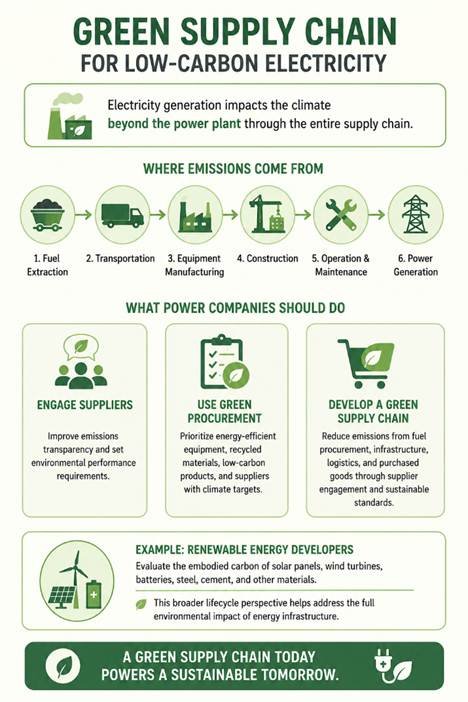
The climate impact of electricity generation extends beyond the power plant. Fuel extraction, transportation, equipment manufacturing, construction, and maintenance can contribute significantly to Supply Chain Emissions.
Power companies should therefore engage suppliers to improve emissions transparency and establish environmental performance requirements. Procurement policies can prioritize energy-efficient equipment, recycled materials, low-carbon construction products, and suppliers with credible climate targets.
Developing a Green Supply Chain can help companies reduce emissions associated with fuel procurement, infrastructure development, logistics, and purchased goods. Supplier engagement programs, lifecycle assessments, emissions data collection, and sustainable procurement standards can strengthen the overall decarbonization strategy.
For example, renewable energy developers can evaluate the embodied carbon of solar panels, wind turbines, batteries, steel, cement, and other critical materials. This broader lifecycle perspective helps companies move beyond operational emissions and address the full environmental impact of energy infrastructure.
Carbon Credits and Carbon Offsets
While direct emissions reductions should remain the primary priority, Carbon Credits and Carbon Offset mechanisms may support organizations in addressing residual emissions.
Companies can generate or purchase carbon credits through eligible projects that avoid, reduce, or remove greenhouse gas (GHG) emissions.
Carbon credits should not be viewed as a substitute for direct emissions reduction. A credible climate strategy should prioritize eliminating or reducing operational emissions before using offsets for unavoidable residual emissions.
Manufacturing Industries aiming to become Carbon Neutral had better clearly define their emissions boundary, measure their baseline, establish reduction targets, and transparently disclose the role of offsets in their climate strategy.
Sustainability and ESG (Environmental Social Governance) Reporting
As climate-related information becomes increasingly important to investors, customers, regulators, and financial institutions, Sustainability Reporting has become a strategic activity for power companies.
Organizations are increasingly expected to disclose information about greenhouse gas (GHG) emissions, energy consumption, renewable energy adoption, climate risks, reduction targets, and progress against commitments. ESG Reporting provides stakeholders with greater visibility into environmental, social, and governance performance.
Strong ESG Compliance practices can also improve access to capital and strengthen stakeholder confidence. Power companies that demonstrate measurable progress toward emissions reduction may be better positioned to respond to evolving regulatory requirements and investor expectations.
Effective reporting includes transparent data covering Scope 1, Scope 2, and relevant Scope 3 emissions. It also explains the methodology used, emission factors, reduction initiatives, renewable energy consumption, and progress toward established targets.
The Role of Technology in the Energy Transition
Technology is accelerating the transformation of the power sector. Smart grids, advanced energy storage, artificial intelligence, blockchain-based energy tracking, green hydrogen, carbon capture, and digital monitoring systems are creating new opportunities for emissions reduction.
Energy storage can enable greater integration of renewable generation, while smart grid technologies can improve demand management and reduce system losses.
Green hydrogen (GH) may also become relevant for long-duration energy storage and integration with other hard-to-abate sectors. As these technologies mature, they can support a more flexible and resilient energy system.
Building a Low-Carbon Power Sector
The future of the electricity industry will be shaped by the ability to balance three priorities: energy security, affordability, and environmental sustainability. The transition away from high-carbon generation requires coordinated action from power producers, governments, technology providers, investors, and consumers.
Companies establish clear emissions baselines, identify high-impact reduction opportunities, increase renewable energy adoption, improve operational efficiency, engage suppliers, and strengthen climate disclosures.
The objective not be limited to achieving a single carbon reduction target. Instead, companies should build a continuous improvement framework that integrates climate action into investment decisions, operations, procurement, and corporate strategy.
Final Word
The power and electricity generation industry is undergoing one of the most significant transformations in its history. The growing adoption of Renewable Energy, increasing demand for Clean Energy, and stronger climate expectations are reshaping how electricity is produced and consumed.
Effective Carbon Footprint Reduction requires a comprehensive approach that addresses Scope 1 direct Emissions, Scope 2 Indirect Emissions, and Scope 3 Other Emissions across the value chain. Renewable energy expansion, energy efficiency, digital technologies, sustainable procurement, Green Supply Chain practices, and responsible use of Carbon Credits can all contribute to long-term Decarbonization.
At the same time, robust Sustainability Reporting, ESG Reporting, and ESG Compliance can help companies demonstrate measurable progress and build stakeholder trust.
The transition to a lower-carbon electricity system is not simply an environmental necessity—it is an opportunity to create a more resilient, efficient, innovative, and competitive energy industry. Power companies that act today to measure, manage, and reduce their Carbon Footprint will be better positioned to lead the global Energy Transition and contribute meaningfully to a more sustainable future.