The automotive and vehicle manufacturing industry is undergoing a major transformation as sustainability becomes a central focus across global markets. Traditionally associated with high energy consumption, extensive resource use, and significant greenhouse gas emissions, the sector is now embracing innovative strategies to reduce its carbon footprint and contribute to a cleaner future. From sourcing raw materials to manufacturing processes, logistics, and vehicle design, companies are exploring opportunities to minimize environmental impact while maintaining efficiency, quality, and profitability.
Carbon footprint reduction in the automotive industry is no longer limited to the emissions produced by vehicles during operation. Manufacturers are increasingly examining the entire life cycle of a vehicle, including material extraction, production, transportation, usage, and end-of-life management. This comprehensive approach is helping organizations identify opportunities for sustainability improvements at every stage of the value chain.
Understanding Carbon Footprint in Vehicle Manufacturing
The carbon footprint of a vehicle is generated through various activities across its life cycle. The extraction and processing of raw materials, energy-intensive manufacturing operations, transportation of components, assembly processes, and waste generation all contribute to emissions. Even before a vehicle reaches a customer, a substantial amount of environmental impact may already have occurred.
Recognizing this challenge, automotive manufacturers are adopting life cycle thinking to understand where emissions originate and how they can be reduced. By evaluating each stage of production and operation, companies can develop targeted strategies that deliver meaningful environmental benefits.
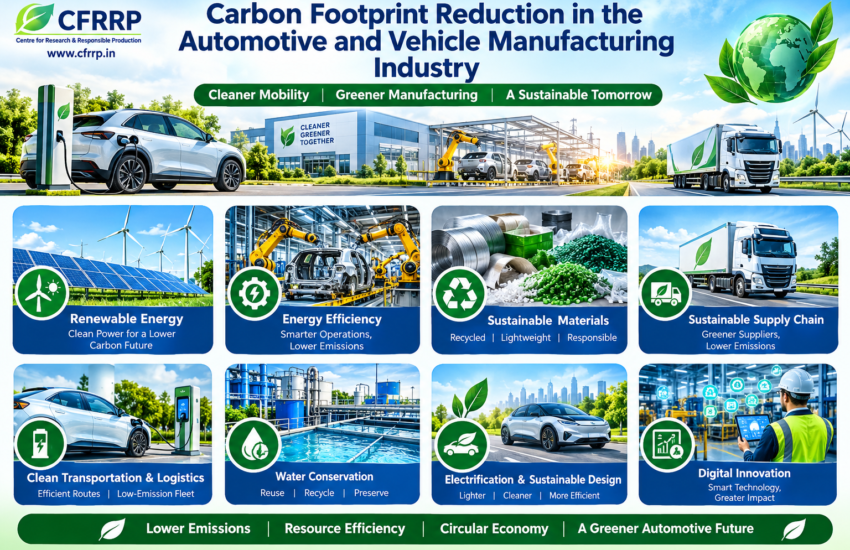
Transitioning to Renewable Energy
Energy consumption is one of the most significant contributors to emissions in automotive manufacturing facilities. Vehicle assembly plants, component production facilities, paint shops, and testing centers require substantial amounts of electricity and thermal energy.
To address this challenge, many manufacturers are transitioning toward renewable energy sources such as solar, wind, hydroelectric, and biomass energy. Renewable power helps reduce dependence on fossil-fuel-based electricity and lowers emissions associated with production activities.
Manufacturing facilities are increasingly installing onsite renewable energy systems while also purchasing green electricity from external providers. These initiatives support long-term sustainability goals while enhancing energy security and reducing exposure to fluctuating energy costs.
Improving Energy Efficiency in Manufacturing Operations
Energy efficiency remains one of the most effective ways to reduce carbon emissions. Automotive manufacturers are investing in advanced technologies and operational improvements that minimize energy consumption without compromising productivity.
Modern production equipment, intelligent automation systems, and energy management technologies allow factories to optimize resource use. Smart sensors and monitoring tools provide real-time visibility into energy consumption patterns, helping organizations identify inefficiencies and implement corrective actions.
Energy-efficient lighting, heating, ventilation, and cooling systems further contribute to lower emissions across manufacturing facilities. Continuous improvement programs encourage employees to identify opportunities for resource conservation and operational efficiency.
Sustainable Material Selection
Materials used in vehicle manufacturing have a significant impact on overall carbon emissions. The extraction, processing, and transportation of raw materials often require large amounts of energy and resources.
Manufacturers are increasingly exploring sustainable alternatives that reduce environmental impacts while maintaining performance and safety standards. Recycled metals, recycled plastics, renewable materials, and responsibly sourced components are becoming more common in vehicle production.
The use of lightweight materials also contributes to sustainability objectives. Lighter vehicles generally require less energy during operation, resulting in lower emissions throughout their life cycle. By carefully selecting materials and optimizing product design, manufacturers can achieve both environmental and performance benefits.
Circular Economy and Resource Efficiency
The automotive industry is embracing circular economy principles to reduce waste and maximize resource utilization. Rather than following a traditional approach of extracting, producing, consuming, and disposing, circular economy strategies focus on extending the useful life of materials and products.
Manufacturers are increasing efforts to recycle production waste, recover valuable materials, and reuse components whenever possible. Vehicle parts that reach the end of their service life can often be refurbished, re manufactured, or recycled into new products.
Designing vehicles with recyclability in mind allows materials to be recovered more efficiently when vehicles are retired. These practices help reduce demand for virgin resources while lowering emissions associated with material extraction and processing.
Sustainable Supply Chain Management
A significant portion of the automotive industry’s carbon footprint originates within the supply chain. Components and materials often travel long distances before reaching assembly facilities, generating emissions through transportation and logistics activities.
To address this issue, manufacturers are working closely with suppliers to promote sustainable practices throughout the value chain. Environmental performance criteria are increasingly integrated into supplier selection and evaluation processes.
Companies are encouraging suppliers to improve energy efficiency, adopt renewable energy, reduce waste, and measure emissions. Collaborative sustainability initiatives help create a more transparent and environmentally responsible supply chain.
Local sourcing strategies are also being explored to reduce transportation distances and associated emissions. By strengthening regional supply networks, manufacturers can improve resilience while lowering environmental impacts.
Cleaner Transportation and Logistics
Transportation plays an essential role in moving raw materials, components, and finished vehicles. As a result, logistics operations represent an important opportunity for carbon footprint reduction.
Automotive companies are optimizing transportation routes, improving vehicle utilization, and adopting more efficient logistics planning systems. Digital technologies enable real-time tracking and route optimization, reducing unnecessary fuel consumption.
The use of low-emission transportation options, including electric and alternative-fuel vehicles, is becoming increasingly common within logistics networks. Rail and maritime transport are also being utilized where appropriate to reduce emissions compared to conventional road transportation.
By improving logistics efficiency, manufacturers can reduce costs while supporting environmental objectives.
Water Conservation and Sustainable Resource Management
Water is an important resource in vehicle manufacturing, particularly in painting, cleaning, cooling, and various production processes. Sustainable water management contributes indirectly to carbon footprint reduction by reducing the energy required for water treatment, pumping, and distribution.
Manufacturers are implementing water recycling systems, rainwater harvesting solutions, and efficient process technologies to minimize water consumption. Closed-loop systems allow water to be reused multiple times, reducing demand on local water resources.
Resource conservation efforts extend beyond water and include responsible management of chemicals, packaging materials, and production inputs. These initiatives contribute to broader sustainability goals while improving operational efficiency.
Electrification and Sustainable Vehicle Design
One of the most significant developments in the automotive sector is the shift toward vehicle electrification. Manufacturers are investing heavily in the development of electric mobility solutions that reduce emissions associated with vehicle operation.
At the same time, companies are focusing on designing vehicles that require fewer resources during production and operation. Advanced engineering techniques help improve aerodynamics, reduce weight, and enhance overall efficiency.
Sustainable design principles encourage manufacturers to consider environmental impacts throughout the product life cycle. This includes selecting eco-friendly materials, improving durability, and facilitating future recycling or reuse.
By integrating sustainability into product development, companies can create vehicles that align with evolving environmental expectations and consumer preferences.
Digital Transformation Supporting Sustainability
Digital technologies are playing an increasingly important role in reducing emissions across the automotive sector. Smart manufacturing systems, data analytics, artificial intelligence, and connected technologies provide valuable insights into operational performance and environmental impacts.
Digital tools help manufacturers monitor energy use, optimize production schedules, reduce waste, and improve equipment efficiency. Predictive maintenance systems minimize downtime and extend equipment life, reducing resource consumption and unnecessary replacements.
Digital twins and simulation technologies allow engineers to evaluate sustainability improvements before implementing physical changes, reducing material waste and accelerating innovation.
As digital transformation continues to advance, its contribution to carbon footprint reduction is expected to become even more significant.
Employee Engagement and Sustainability Culture
Successful carbon footprint reduction requires more than technological investments. It also depends on creating a culture of sustainability throughout the organization.
Automotive manufacturers are increasingly engaging employees in environmental initiatives through awareness programs, training sessions, and sustainability campaigns. Employees are encouraged to identify opportunities for resource conservation and participate in continuous improvement efforts.
A strong sustainability culture fosters innovation, accountability, and collaboration. When employees understand the environmental impact of their actions, they become active contributors to organizational climate goals.
The Road Ahead
The automotive and vehicle manufacturing industry is entering a new era where sustainability is becoming a fundamental business priority. Reducing carbon emissions across manufacturing operations, supply chains, logistics networks, and product life cycles is essential for addressing climate change and meeting stakeholder expectations.
Through renewable energy adoption, energy-efficient manufacturing, sustainable materials, circular economy practices, responsible supply chain management, digital innovation, and vehicle electrification, the industry is making meaningful progress toward a lower-carbon future.
As technologies continue to evolve and sustainability becomes increasingly integrated into business strategies, automotive manufacturers have a unique opportunity to lead the transition toward cleaner mobility and environmentally responsible industrial development. By embracing innovation and collaboration, the sector can achieve long-term growth while contributing to a more sustainable world for future generations.