Introduction
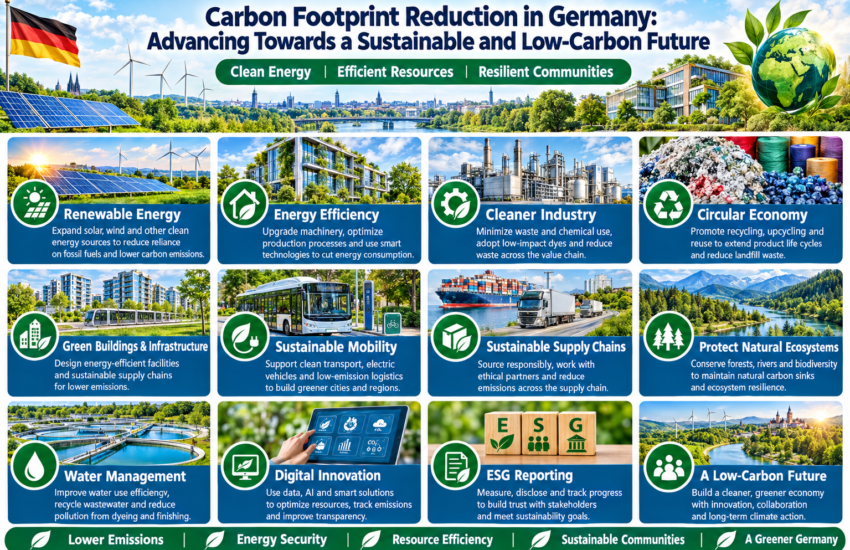
Germany is strengthening its commitment to environmental sustainability as industries, businesses, and communities work towards reducing their environmental impact. With its strong industrial base and focus on technological innovation, the country is advancing the transition towards cleaner energy, efficient resource utilization, and responsible manufacturing. Carbon Footprint Reduction has become an important business priority, particularly as customers, investors, and supply chain partners increasingly consider environmental performance when making decisions.
For German companies, sustainability involves more than adopting environmentally friendly technologies. It requires understanding greenhouse gas emissions, improving operational efficiency, engaging suppliers, and integrating environmental responsibility into long-term business strategies. Through renewable energy, responsible production, and transparent reporting, organizations can contribute to Germany’s transition towards a more sustainable economy.
Germany’s Energy Transition and Renewable Energy
Germany’s Energy Transition, widely known as the Energizer, focuses on transforming the country’s energy system through renewable electricity, energy efficiency, and reduced dependence on fossil fuels. Wind power, solar energy, and other low-carbon energy sources play important roles in this transformation.
Businesses can contribute by installing solar panels, purchasing electricity from renewable sources, improving energy management systems, and upgrading energy-intensive equipment. These initiatives can reduce dependence on conventional energy sources while supporting long-term environmental objectives.
Adopting Renewable Energy can also help companies address Scope 2 Emissions, which arise indirectly from the generation of purchased electricity, steam, heating, and cooling. For example, a German automotive component manufacturer can source renewable electricity for its production facility and monitor energy consumption to evaluate improvements in its emissions profile.
However, businesses should ensure that renewable electricity claims are supported by appropriate documentation and accounting methods. Using Clean Energy effectively requires both responsible energy procurement and continuous improvements in consumption efficiency.
Understanding Carbon Footprint and Industrial Emissions
A company’s Carbon Footprint represents the greenhouse gas emissions associated with its activities, products, and services. Understanding these emissions helps organizations identify environmental risks, establish reduction priorities, and evaluate the effectiveness of sustainability initiatives.
Emissions are generally categorized into three scopes.
Scope 1 Emissions are direct emissions from sources owned or controlled by a company, such as fuel combustion in boilers, industrial furnaces, and company-operated vehicles.
Scope 2 Emissions are indirect emissions associated with purchased electricity, heating, cooling, and steam.
Scope 3 Emissions include other indirect emissions across the value chain, such as purchased materials, transportation, business travel, waste disposal, and product use, where applicable.
For German manufacturers, addressing all three categories can provide a more complete understanding of their environmental impact. An automotive manufacturer, for example, may reduce direct emissions by improving boiler efficiency, lower purchased-electricity emissions through renewable energy, and address supply chain emissions by engaging steel, plastics, and component suppliers.
Accurate emissions information allows businesses to move beyond general environmental commitments and develop practical reduction strategies based on their operational realities.
Decarbonization Through Sustainable Manufacturing
Industrial Decarbonization is essential for businesses seeking to reduce their environmental impact while maintaining competitiveness. German companies can explore several approaches, including electrifying industrial processes, improving equipment efficiency, recovering waste heat, reducing material losses, and adopting lower-carbon production technologies.
Manufacturers can also review production schedules, optimize logistics, and introduce circular-economy practices that extend product life and improve material recovery. These measures may reduce energy consumption, operating costs, and avoidable waste.
Carbon Emissions reduction should be approached through a structured process that begins with measuring the current emissions baseline. Businesses can then identify major emission sources, set realistic targets, implement suitable measures, and monitor progress.
A company should prioritize direct reductions wherever feasible rather than relying exclusively on compensation mechanisms. A Carbon Neutral claim should be made only when the applicable emissions boundary, reduction measures, residual emissions, and treatment of offsets are clearly defined and substantiated.
Building a Green Supply Chain
A significant part of a company’s environmental impact may occur outside its own facilities. Raw material extraction, component manufacturing, transportation, packaging, and product disposal can contribute substantially to Supply Chain Emissions.
Developing a Green Supply Chain involves working with suppliers to improve environmental performance throughout the value chain. German businesses can engage suppliers on energy consumption, material sourcing, waste reduction, renewable electricity, and emissions disclosure.
For example, a manufacturer can request emissions information from its suppliers, assess the environmental impact of frequently purchased materials, and prioritize engagement with suppliers that have significant emissions. Collaborative improvement programmes can help suppliers identify energy-saving opportunities and adopt cleaner production methods.
Companies should also consider product durability, repairability, recycled materials, and efficient transportation when evaluating supply chain sustainability. These practices can improve resource utilization while supporting broader decarbonization objectives.
ESG Compliance and Sustainability Reporting
Environmental performance is increasingly connected with corporate transparency and responsible business management. ESG Reporting enables organizations to communicate their environmental, social, and governance practices, while Sustainability Reporting can provide stakeholders with information about objectives, performance, risks, and progress.
German businesses operating in European markets should evaluate the reporting and due diligence requirements applicable to their organization, including relevant European Union legislation and German regulations. Requirements vary according to factors such as company size, business structure, sector, and the applicable rules in force.
Effective ESG Compliance begins with identifying relevant obligations, maintaining reliable records, assigning responsibilities, and reviewing the accuracy of reported information. Companies should also document their emissions calculations, energy consumption, reduction initiatives, and sustainability targets.
Transparent reporting can help businesses communicate credible progress to customers, investors, employees, and supply chain partners. It also helps management identify gaps and determine where additional investment or operational improvements may be necessary.
Carbon Credits and Carbon Offsets: Supporting Climate Action
Although direct emissions reduction should remain the priority, some businesses may consider Carbon Credits as part of their broader climate strategy. Carbon credits generally represent quantified emissions reductions or removals associated with eligible projects, subject to the relevant programme’s rules and verification procedures.
A Carbon Offset may be used to compensate for emissions through eligible climate projects, such as forest restoration or activities that reduce greenhouse gas emissions. However, the environmental integrity of these projects depends on factors including credible quantification, additionality, permanence, and appropriate safeguards.
Companies should evaluate the quality of credits carefully, disclose their use transparently, and avoid presenting offset purchases as a substitute for reducing emissions within their own operations and value chains.
Carbon credits may complement a comprehensive climate strategy, but credible climate action depends on measurable progress towards reducing actual emissions.
The Future of Carbon Footprint Reduction in Germany
Germany’s sustainability journey presents opportunities for organizations to combine environmental responsibility with operational improvement. Investments in renewable energy, efficient manufacturing, sustainable procurement, and emissions monitoring can help businesses prepare for changing market expectations.
Successful Carbon Footprint Reduction requires consistent action, reliable information, and collaboration across the organization and its supply chain. Businesses can begin by assessing their emissions, prioritizing significant sources, establishing achievable targets, and reviewing their progress regularly.
Conclusion
Carbon footprint reduction is becoming an important element of sustainable business development in Germany. Through clean energy adoption, industrial decarbonization, responsible supply chains, and transparent ESG practices, companies can reduce their environmental impact and strengthen long-term resilience.
The transition towards a lower-carbon economy requires participation from manufacturers, suppliers, investors, and policymakers. By measuring emissions, implementing meaningful reductions, and communicating progress responsibly, German businesses can contribute to a more sustainable industrial future.