Bulgaria is undergoing an important transition toward a more sustainable and low-carbon economy. As environmental priorities become increasingly integrated into business strategy, energy planning, industrial development, transportation, and urban development, carbon footprint reduction is becoming an important consideration for organizations across the country. The transition is influenced by European climate objectives, changing energy systems, technological development, and growing expectations from investors, customers, employees, and communities.
Carbon emissions in Bulgaria are associated with several areas of economic activity, including energy generation, manufacturing, transportation, buildings, agriculture, waste management, and industrial supply chains. Reducing these emissions requires a coordinated approach that combines energy efficiency, renewable energy, cleaner production, sustainable mobility, resource efficiency, and responsible business practices.
Understanding Bulgaria’s Carbon Footprint
A carbon footprint represents the greenhouse gas emissions associated with an organization, product, activity, facility, or wider economy. These emissions can arise directly from fuel combustion and industrial processes as well as indirectly through purchased electricity, transportation, purchased goods, waste, logistics, and other activities across the value chain.
For Bulgarian businesses, understanding the sources of emissions is an important starting point for developing an effective decarbonization strategy. Manufacturing companies may need to examine production processes and energy consumption, while commercial organizations may focus on buildings, electricity, heating, transportation, and supply chains.
A comprehensive carbon assessment can help organizations identify emission-intensive activities and establish practical opportunities for carbon footprint reduction. This assessment can also support sustainability reporting and broader environmental, social, and governance objectives.
Transitioning Toward Renewable Energy
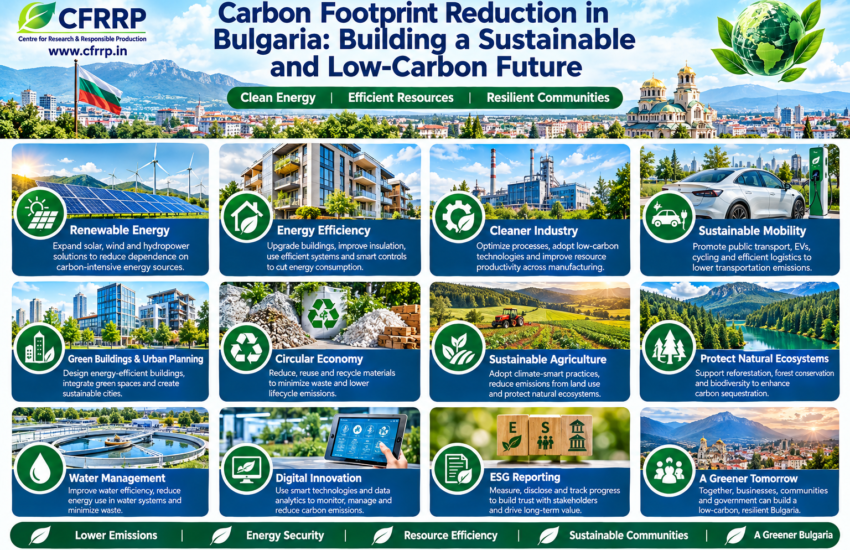
The transition toward Renewable Energy represents an important opportunity for Bulgaria to reduce dependence on carbon-intensive energy sources. Solar energy, wind power, hydropower, and other renewable solutions can contribute to a cleaner and more diversified energy system.
Businesses can explore rooftop solar installations, renewable electricity procurement, energy storage, and other clean energy solutions depending on their operational requirements. Industrial facilities can combine renewable energy with energy efficiency initiatives to reduce both energy consumption and associated Carbon Emissions.
Renewable Energy adoption can also provide organizations with greater control over energy management and support long-term sustainability objectives. As clean technologies become increasingly integrated into commercial and industrial operations, renewable power can become an important component of corporate decarbonization strategies.
Improving Energy Efficiency
Energy efficiency remains one of the most practical approaches to Carbon Footprint Reduction in Bulgaria. Industrial facilities, offices, hotels, warehouses, retail properties, and public buildings can identify opportunities to reduce unnecessary energy consumption through efficient equipment, improved insulation, modern lighting, intelligent controls, and optimized heating and cooling systems.
Energy audits can help organizations identify inefficient equipment and processes. Building management systems and smart monitoring technologies can provide real-time information about energy use, enabling facility managers to detect inefficiencies and make informed operational decisions.
Industrial organizations can also evaluate production processes, compressed air systems, motors, boilers, refrigeration systems, and other energy-intensive operations. Improving efficiency can simultaneously support environmental performance and operational cost management.
Decarbonizing Bulgarian Industry
Industry plays an important role in Bulgaria’s economic development and presents significant opportunities for Decarbonization. Manufacturing organizations can evaluate their production processes, fuel consumption, raw materials, equipment, transportation, and waste generation to identify emission reduction opportunities.
Process optimization can reduce energy requirements while improving productivity. Electrification can provide another pathway where technically and economically feasible, particularly when electricity is increasingly supplied through cleaner energy sources.
Companies can also explore low-carbon technologies, cleaner fuels, material efficiency, industrial symbiosis, waste heat recovery, and circular production models. These approaches can help reduce emissions while improving resource productivity.
Addressing Scope Emissions Across the Value Chain
Carbon reduction should not be limited to emissions generated directly within an organization’s facilities. Scope Emissions provide a broader perspective of an organization’s environmental impact.
Scope One Emissions are associated with direct sources controlled by an organization, while Scope Two Emissions relate to purchased electricity, heating, cooling, or steam. Scope Three Emissions can arise from activities across the value chain, including purchased materials, logistics, business travel, employee commuting, product use, and waste.
For Bulgarian companies participating in international supply chains, addressing Supply Chain Emissions can become particularly important. Customers and multinational business partners may increasingly expect suppliers to demonstrate environmental performance and credible decarbonization strategies.
Sustainable Transportation and Mobility
Transportation is another important area for Carbon Footprint Reduction. Businesses can reduce transportation-related emissions through efficient logistics, route optimization, fleet management, public transportation, shared mobility, and the gradual adoption of electric vehicles where appropriate.
Urban areas can benefit from improved public transportation, walking infrastructure, cycling facilities, and cleaner mobility solutions. Businesses can also encourage employees to adopt lower-carbon commuting practices.
Logistics companies can improve environmental performance by optimizing delivery routes, reducing unnecessary journeys, improving vehicle utilization, and incorporating cleaner technologies into their fleets.
Sustainable Buildings and Urban Development
Buildings represent an important opportunity for improving environmental performance in Bulgaria. Energy-efficient building envelopes, efficient heating and cooling systems, smart controls, renewable energy, efficient lighting, and sustainable materials can contribute to lower operational emissions.
Renovating existing buildings can also provide significant opportunities for energy efficiency and Carbon Footprint Reduction. Property developers and facility owners can incorporate sustainability into planning, construction, renovation, and maintenance decisions.
Green building practices can support resource efficiency while improving indoor environmental conditions. Sustainable urban planning can further integrate energy, mobility, water management, waste reduction, and green infrastructure into community development.
Circular Economy and Resource Efficiency
Carbon emissions are closely connected with the extraction, production, transportation, and disposal of materials. Bulgaria can strengthen its sustainability transition by adopting Circular Economy principles across industries.
Businesses can reduce environmental impacts through material reuse, recycling, repair, re-manufacturing, responsible procurement, and improved waste management. Industrial organizations can investigate opportunities to reuse waste materials or by-products in other production processes.
A circular approach can reduce dependence on virgin resources and lower the environmental impact associated with material production and disposal.
Agriculture and Land-Based Carbon Reduction
Agriculture also has an important role in Bulgaria’s environmental transition. Agricultural activities can generate emissions associated with livestock, fertilizers, fuel consumption, soil management, and land use.
Sustainable agricultural practices can improve resource efficiency and support soil health. Precision agriculture, efficient irrigation, responsible fertilizer management, renewable energy, improved livestock practices, and appropriate land management can contribute to reducing environmental impacts.
Forests, grasslands, wetlands, and other natural ecosystems can also support carbon sequestration while providing biodiversity and ecological benefits. Protecting and restoring these ecosystems can therefore complement emission reduction strategies.
ESG Reporting and Corporate Sustainability
Carbon Footprint Reduction is increasingly connected with ESG Reporting and corporate sustainability. Bulgarian organizations can strengthen transparency by measuring emissions, monitoring environmental performance, establishing reduction objectives, and communicating progress to stakeholders.
Sustainability Reporting can help companies demonstrate their environmental commitments to investors, customers, employees, lenders, business partners, and other stakeholders. Transparent reporting can also help organizations identify areas where further improvements are required.
Carbon Credits and Carbon Offset mechanisms may have a role within broader climate strategies, particularly for addressing residual emissions. However, organizations should prioritize direct emission reductions and operational improvements before relying extensively on offsetting approaches.
Building a Low-Carbon Future for Bulgaria
Bulgaria’s transition toward a low-carbon economy requires cooperation among businesses, government institutions, communities, investors, technology providers, and consumers. Organizations can contribute by measuring their Carbon Footprint, improving energy efficiency, adopting Renewable Energy, reducing Scope Emissions, strengthening sustainable procurement, and developing credible Decarbonization strategies.
The transition can also create opportunities for innovation, investment, technological modernization, and improved resource productivity. Companies that integrate sustainability into their core operations can strengthen their ability to respond to changing environmental expectations and evolving market requirements.
Carbon Footprint Reduction in Bulgaria is therefore more than an environmental objective. It can become part of a broader transformation toward efficient energy use, responsible resource management, sustainable industrial development, cleaner transportation, and resilient communities.
By combining Clean Energy, Energy Efficiency, sustainable production, circular economy practices, responsible supply chains, and effective ESG Reporting, Bulgarian organizations can contribute to a more sustainable future while building stronger and more resilient operations. The pathway to a low-carbon Bulgaria will depend on continuous improvement, practical innovation, collaboration, and a long-term commitment to environmental responsibility.