The buildings and real estate sector plays a significant role in global environmental sustainability. From the construction of new properties to the operation, maintenance, renovation, and eventual demolition of buildings, real estate activities consume substantial amounts of energy and resources. As businesses, investors, governments, and communities increasingly focus on climate action, carbon footprint reduction has become an important priority for the built environment.
Carbon emissions associated with buildings arise from both direct and indirect activities. Energy used for heating, cooling, lighting, ventilation, and other building operations contributes to operational emissions, while construction materials, transportation, manufacturing, and waste contribute to embodied emissions. Addressing both aspects is essential for creating buildings that are environmentally responsible, economically efficient, and resilient over the long term.
Understanding the Carbon Footprint of Buildings
A building’s carbon footprint represents the greenhouse gas emissions associated with its construction, operation, maintenance, refurbishment, and end-of-life activities. These emissions can originate from electricity consumption, fossil fuels, refrigerants, construction materials, transportation, water use, waste generation, and supply chain activities.
Operational energy is often a major area of focus because buildings require continuous energy for everyday activities. Inefficient air-conditioning systems, outdated lighting, poor insulation, inefficient equipment, and excessive energy consumption can increase emissions while also raising operating costs.
Embodied carbon is equally important. Materials such as cement, steel, glass, aluminium, and other construction products require energy-intensive manufacturing processes. Transportation of materials and construction activities can further increase the environmental impact of a property. Therefore, carbon footprint reduction needs to begin during the design and planning stage rather than being considered only after a building becomes operational.
Energy Efficiency as a Foundation for Carbon footprint Reduction
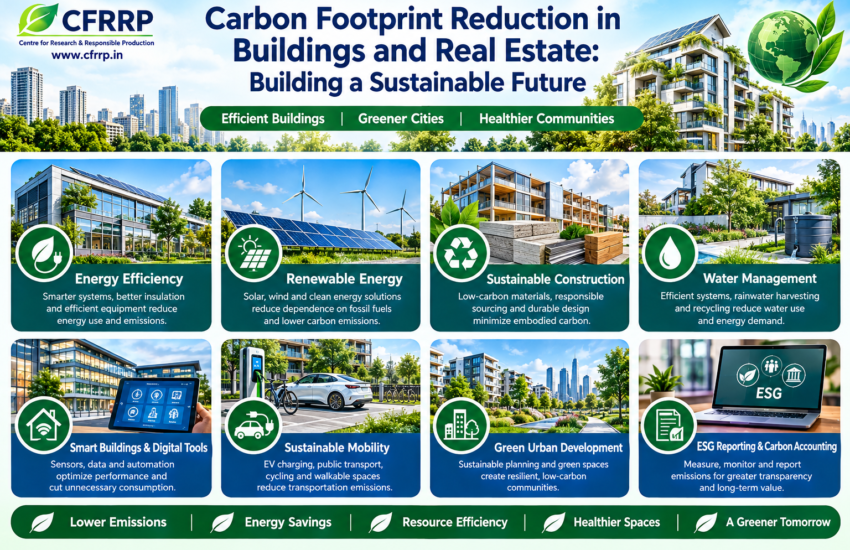
Improving energy efficiency is one of the most practical approaches to reducing emissions from buildings. Efficient heating, ventilation, and air-conditioning systems can significantly reduce energy consumption while maintaining indoor comfort. Smart building management systems can monitor energy use and automatically adjust equipment according to occupancy, weather conditions, and operational requirements.
Lighting also provides opportunities for improvement. Energy-efficient lighting combined with occupancy sensors, daylight controls, and automated management systems can reduce unnecessary electricity consumption. Building envelopes can be improved through better insulation, efficient windows, shading systems, reflective surfaces, and appropriate architectural design.
Energy audits can help property owners identify areas of excessive consumption and prioritize improvement measures. Continuous monitoring allows organizations to track performance, identify abnormal consumption patterns, and implement corrective actions.
Renewable Energy and Clean Energy Integration
The transition toward clean energy can further strengthen carbon reduction efforts in real estate. Buildings can incorporate renewable energy systems such as rooftop solar installations, solar carports, and other locally appropriate clean energy solutions.
Real estate developers and property managers can also explore renewable electricity procurement and clean energy agreements where on-site generation is not sufficient. Combining energy efficiency with renewable energy can reduce dependence on carbon-intensive electricity and support broader decarbonization objectives.
Energy storage solutions can complement renewable energy systems by improving energy management and supporting greater utilization of locally generated electricity. Smart energy management can help buildings use electricity more efficiently while reducing unnecessary demand.
Sustainable Construction and Low-Carbon Materials
Carbon footprint reduction should also address the materials used in construction. Sustainable building design can prioritize materials with lower embodied carbon, recycled content, responsible sourcing, and longer service lives.
Low-carbon cement alternatives, recycled steel, responsibly sourced timber, recycled materials, and innovative construction products can contribute to reducing embodied emissions. Developers can evaluate materials based on their entire life cycle rather than considering only their initial cost.
Designing buildings for durability, adaptability, repairability, and future reuse can further reduce environmental impacts. Adaptive reuse of existing buildings can sometimes avoid the emissions associated with demolition and new construction while preserving valuable resources and infrastructure.
Water Management and Resource Efficiency
Water consumption is another important consideration for sustainable buildings. Treating, pumping, heating, and distributing water requires energy, creating associated emissions. Efficient plumbing systems, rainwater harvesting, wastewater treatment, water recycling, and smart monitoring can help reduce both water consumption and related energy requirements.
Resource efficiency should extend beyond water and energy. Construction and operational waste can be minimized through improved procurement, material planning, recycling, reuse, and responsible disposal practices. Circular economy principles can help property owners retain the value of materials for longer periods.
Smart Buildings and Digital Technologies
Digital technologies are transforming the way buildings are designed, operated, and maintained. Smart meters, Internet of Things devices, sensors, building management systems, and data analytics can provide real-time information about energy consumption and building performance.
Artificial intelligence can support predictive maintenance, optimize heating and cooling, identify inefficient equipment, and improve occupancy-based energy management. Digital monitoring can also help facility managers identify opportunities for carbon footprint reduction without compromising occupant comfort.
Building information modelling and digital twins can support sustainability throughout the property life cycle. These technologies can help developers evaluate design alternatives, understand resource requirements, and make more informed decisions before construction begins.
Sustainable Mobility and Real Estate
The environmental performance of a property is also influenced by how people travel to and from it. Real estate developments can support lower-carbon mobility by providing pedestrian-friendly environments, bicycle facilities, electric vehicle charging infrastructure, and convenient access to public transportation.
Commercial developments, residential communities, industrial facilities, and mixed-use projects can incorporate mobility planning into their sustainability strategies. Encouraging cleaner transportation can help address emissions beyond the physical building itself.
ESG and Sustainability Reporting
Carbon footprint reduction is increasingly connected with environmental, social, and governance expectations. Investors, tenants, customers, regulators, and other stakeholders are paying greater attention to the environmental performance of real estate assets.
Effective ESG reporting can provide transparency regarding energy consumption, greenhouse gas emissions, renewable energy adoption, water use, waste management, and sustainability initiatives. Property owners can establish clear environmental objectives, monitor progress, and communicate performance through credible sustainability reporting frameworks.
Carbon accounting can help organizations understand their Scope One, Scope Two, and relevant Scope Three emissions. A comprehensive assessment provides a stronger foundation for identifying emission hotpots and developing practical decarbonization strategies.
The Role of Green Building Practices
Green building practices integrate environmental considerations into design, construction, operation, and maintenance. Building certification frameworks can encourage developers and property owners to improve energy performance, indoor environmental quality, resource efficiency, water management, and ecological performance.
However, sustainable real estate should extend beyond certification. A building can achieve environmental performance through continuous improvement, effective facility management, responsible procurement, occupant engagement, and long-term investment in efficiency.
Creating a Low-Carbon footprint Real Estate Future
Carbon footprint reduction in buildings and real estate requires a life cycle approach. Developers need to consider environmental impacts from the earliest design decisions through construction, operation, renovation, and eventual reuse or demolition.
Property owners can begin by establishing a carbon baseline, identifying major emission sources, evaluating energy and resource performance, and developing practical reduction measures. Facility managers can support implementation through continuous monitoring and operational improvements, while tenants and occupants can contribute through responsible energy and resource use.
The transition toward low-carbon buildings is not only an environmental responsibility. Energy efficiency can improve operating performance, sustainable materials can strengthen resource resilience, and smart technologies can enhance building management. Sustainable properties can also respond to changing expectations from investors, tenants, employees, communities, and regulators.
The future of real estate will increasingly depend on the ability to combine economic value with environmental responsibility. Carbon footprint reduction provides a pathway for transforming buildings from passive consumers of resources into efficient, resilient, and sustainable assets. Through clean energy, efficient technologies, sustainable materials, smart systems, responsible construction, and transparent ESG practices, the buildings and real estate sector can contribute meaningfully to a lower-carbon future.
Below is a professional, approximately thousand-word blog focused on Bulgaria, with no numerical figures or numbered sections.