Latvia is steadily strengthening its efforts to reduce its carbon footprint and transition toward a cleaner, more sustainable economy. As a member of the European Union, the country is aligning its climate policies with the broader European transition toward climate neutrality. Latvia has several natural and structural advantages in this transformation, including abundant forests, strong renewable energy resources and a growing interest in clean technologies. At the same time, transport, buildings, agriculture, industry and land use remain important areas where further carbon reductions are needed.
The country’s carbon reduction strategy is focused on reducing greenhouse gas emissions, improving energy efficiency, increasing renewable energy use, modernising infrastructure and encouraging sustainable consumption. The transition is also creating opportunities for businesses to adopt cleaner technologies, improve resource efficiency and develop innovative low-carbon products and services.
Renewable Energy as a Foundation for Carbon Reduction
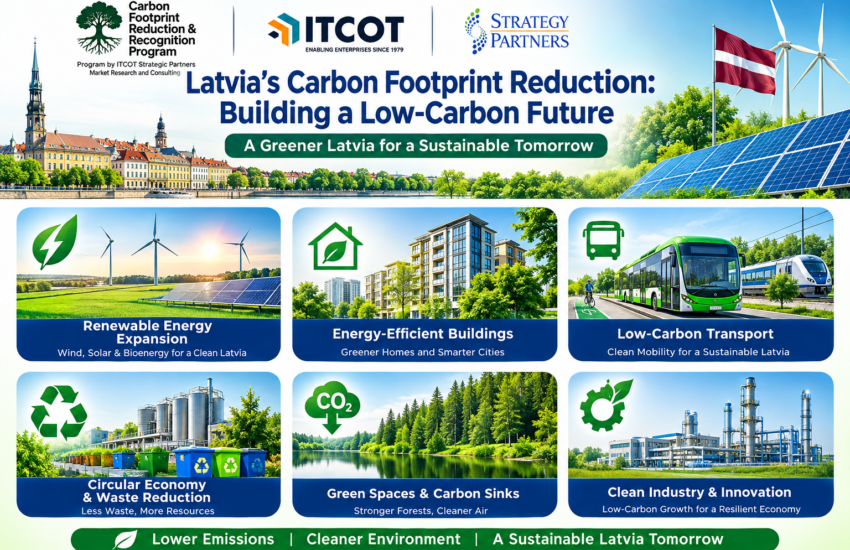
Renewable energy is one of the most important pillars of Latvia’s carbon reduction strategy. Hydropower has traditionally played an important role in the country’s electricity system, while biomass, wind and solar energy are increasingly contributing to the renewable energy mix.
Latvia’s renewable electricity resources provide a strong foundation for reducing dependence on fossil fuels. Expanding wind and solar generation can provide additional clean electricity while supporting the electrification of transport, heating and industrial processes.
Solar energy is becoming increasingly attractive for households, commercial buildings and industrial facilities. Rooftop solar installations can allow businesses to generate clean electricity locally and reduce their reliance on conventional power sources. Large-scale solar and wind projects can also strengthen the country’s energy security while supporting the development of a cleaner electricity system.
The expansion of renewable energy will also require modern electricity grids, energy storage and smart-grid technologies. Digital energy-management systems can help balance electricity supply and demand while enabling renewable energy to be integrated more effectively into the national grid.
Decarbonising the Transport Sector
Transport is one of the major challenges for Latvia’s carbon reduction efforts. Road transportation remains heavily dependent on fossil fuels, particularly for passenger vehicles, freight and commercial transportation.
The transition toward electric mobility can significantly reduce emissions from road transport. Increasing the availability of charging infrastructure, encouraging electric vehicles and supporting the electrification of commercial and public fleets can help reduce fossil-fuel consumption.
Public transportation can also play an important role. Expanding reliable rail, tram and bus services can encourage people to shift away from private vehicles. Electric buses and modern rail systems can further reduce emissions while improving urban air quality.
Rail transportation has particular potential in Latvia because improved rail connectivity can provide a lower-carbon alternative for both passengers and freight. Modern railway infrastructure, electrification and better connections between cities can contribute to a more sustainable transport system.
Cycling and walking infrastructure can provide additional benefits in urban areas. Creating safe pedestrian routes, cycling networks and low-emission urban zones can reduce dependence on cars while improving quality of life.
Energy Efficiency in Buildings
Buildings are another major area of opportunity for carbon footprint reduction. Latvia’s cold climate means that heating accounts for a significant share of energy consumption in residential and commercial buildings.
Improving insulation, replacing inefficient windows, upgrading heating systems and installing modern energy-management technologies can substantially reduce energy demand. Building renovation can simultaneously lower emissions, reduce energy costs and improve indoor comfort.
Heat pumps are becoming an increasingly important technology for building decarbonisation. When powered by renewable electricity, heat pumps can provide low-carbon heating and reduce dependence on fossil fuels.
District heating systems also have an important role to play. Modernising heating networks, reducing heat losses and increasing the use of renewable energy and recovered heat can improve the efficiency of urban heating systems.
Smart-building technologies can further support carbon reduction. Sensors, automated controls and energy-management platforms can monitor energy consumption and adjust heating, cooling and lighting according to actual demand.
Sustainable Forestry and Land Management
Latvia’s forests are an important natural resource and play a significant role in the country’s carbon balance. Forests absorb carbon dioxide from the atmosphere and store carbon in trees, vegetation and soils.
Sustainable forest management is therefore an important component of Latvia’s climate strategy. Protecting forest ecosystems, improving forest health, restoring degraded areas and promoting responsible forestry practices can help maintain carbon storage.
At the same time, forest resources need to be managed carefully. Sustainable harvesting, biodiversity protection and long-term carbon management must be considered together. Forest-based industries can also contribute to the circular economy by making efficient use of wood resources and developing durable wood-based products that can store carbon for long periods.
Wetlands, grasslands and agricultural soils can also contribute to carbon sequestration. Protecting natural ecosystems and improving land-management practices can help increase carbon storage while supporting biodiversity.
Sustainable Agriculture
Agriculture presents another opportunity for reducing Latvia’s carbon footprint. Farming activities can generate greenhouse gas emissions through livestock, fertiliser use, soil management and agricultural machinery.
Precision agriculture can help farmers use fertilisers, water and fuel more efficiently. Digital monitoring systems, satellite technologies and smart machinery can identify areas requiring specific inputs and reduce unnecessary resource consumption.
Improved manure management can help reduce emissions from livestock operations. Farmers can also explore renewable energy solutions such as biogas, solar power and biomass to reduce dependence on conventional fuels.
Healthy soils are another important part of sustainable agriculture. Practices such as crop rotation, cover crops, reduced tillage and improved soil management can support soil health while potentially increasing carbon storage.
Industrial Carbon Reduction
Latvia’s industrial sector can reduce its carbon footprint through energy efficiency, electrification, renewable energy and cleaner production processes.
Manufacturing companies can begin by identifying the most carbon-intensive stages of their operations. Energy audits and carbon-footprint assessments can help businesses understand where emissions originate and identify opportunities for improvement.
Replacing outdated machinery with energy-efficient equipment can reduce electricity consumption. Industrial facilities can also recover waste heat, improve process controls and introduce automation to reduce resource consumption.
Renewable electricity can further reduce emissions from industrial operations. Companies installing rooftop solar or purchasing renewable electricity can lower the carbon intensity of their energy consumption.
Digital technologies such as sensors, artificial intelligence and industrial energy-management systems can help manufacturers continuously monitor energy use and identify inefficiencies.
Circular Economy and Waste Reduction
Moving toward a circular economy can significantly contribute to Latvia’s carbon reduction efforts. Instead of following a traditional model of extracting resources, manufacturing products, using them and discarding them, businesses can focus on reducing waste and keeping materials in circulation for as long as possible.
Recycling, reuse, refurbishment and product repair can reduce the need for virgin raw materials. Manufacturers can redesign products to use fewer materials and make them easier to repair or recycle.
Better waste segregation and organic-waste management can also reduce environmental impacts. Businesses can minimise packaging, introduce recycled materials and improve production processes to reduce material losses.
The circular economy can also create new business opportunities. Companies involved in recycling, resource recovery, sustainable packaging, remanufacturing and environmental technologies can benefit from the growing demand for low-carbon solutions.
Green Technology and Digitalisation
Technology will play an increasingly important role in Latvia’s carbon reduction journey. Digitalisation can help businesses, cities and households understand and manage their environmental impact.
Smart meters can provide detailed information about energy consumption. Artificial intelligence can optimise industrial processes and transportation systems. Digital platforms can help companies monitor emissions and improve supply-chain efficiency.
Carbon accounting software can also help businesses measure direct and indirect emissions. By identifying emission hotspots, companies can prioritise investments in renewable energy, energy efficiency, cleaner transportation and sustainable materials.
Innovation in areas such as green hydrogen, energy storage, smart grids and low-carbon industrial technologies could further expand Latvia’s decarbonisation opportunities.
The Role of Businesses
Businesses have an important role in Latvia’s transition to a low-carbon economy. Companies can reduce their carbon footprint by measuring emissions, improving energy efficiency, switching to renewable energy and adopting circular production practices.
Carbon reduction can also improve competitiveness. Lower energy consumption can reduce operating costs, while sustainable products can help businesses respond to increasing demand for environmentally responsible goods and services.
Companies can also work with suppliers to reduce supply-chain emissions. Sustainable procurement, efficient logistics, low-carbon packaging and responsible sourcing can help address emissions beyond a company’s direct operations.
Cities and Communities
Latvian cities can become important centres of climate action. Sustainable urban planning can combine energy-efficient buildings, clean transportation, green spaces and renewable energy.
Urban forests, parks and green infrastructure can help absorb carbon, reduce heat and improve air quality. Sustainable public transportation and pedestrian-friendly neighbourhoods can reduce vehicle dependence.
Local governments can also encourage energy-efficient buildings, renewable energy projects and waste reduction initiatives. Community participation is essential because individual choices around transportation, energy consumption, food and waste can collectively influence national emissions.
Latvia’s Path Toward a Low-Carbon Economy
Latvia has many of the building blocks required for a successful carbon reduction transition. Its renewable energy resources, extensive forests, growing clean-technology sector and access to European climate initiatives provide strong opportunities for further progress.
However, achieving deeper emissions reductions will require coordinated action across transport, buildings, industry, agriculture, forestry and energy. Renewable energy must be expanded alongside stronger energy efficiency. Transport needs to become cleaner and more efficient, while buildings require continued modernisation. Businesses will need to integrate carbon management into their investment and operational decisions.
Latvia’s carbon reduction journey is therefore not only an environmental challenge but also an economic opportunity. The transition can encourage innovation, create green industries, strengthen energy security, reduce resource consumption and improve the quality of life for communities.
By combining renewable energy, energy efficiency, sustainable transport, responsible land management, circular-economy practices and technological innovation, Latvia can continue building a more resilient and competitive low-carbon economy.