Introduction
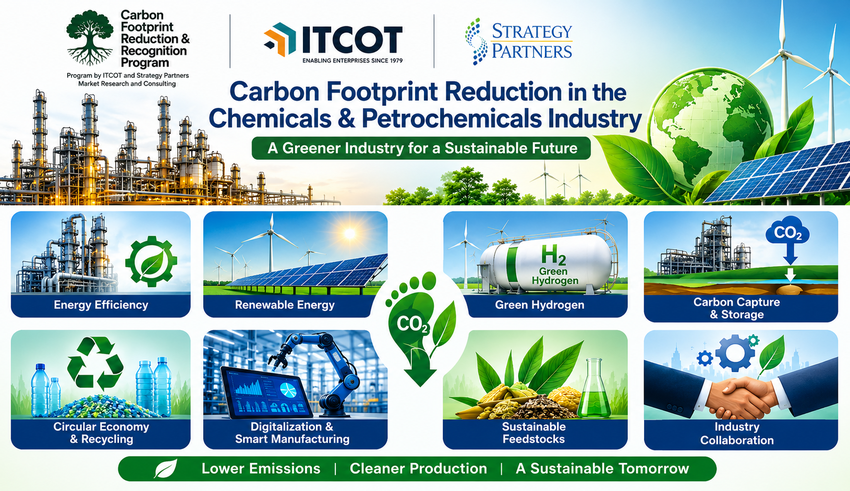
Carbon footprint reduction in the chemicals and petrochemicals industry is becoming a strategic priority as companies address rising environmental concerns and greenhouse gas emissions. The sector is essential to manufacturing, agriculture, healthcare, construction, transportation, and consumer goods, but its energy-intensive processes and dependence on fossil fuel feedstocks contribute significantly to emissions. Companies are adopting cleaner technologies, renewable energy, energy-efficient production methods, carbon capture solutions, sustainable feedstocks, and circular economy practices to reduce environmental impact.The chemicals and petrochemicals industry is vital to the global economy.
It supplies materials for manufacturing, agriculture, healthcare, construction, transportation, and consumer goods. Its products include plastics, fertilizers, industrial chemicals, and specialty materials. These products are essential to modern life.
However, the industry is also a major source of greenhouse gas emissions. Its energy-intensive processes contribute significantly to emissions. The sector also relies heavily on fossil fuel feedstocks. As sustainability becomes a priority, reducing the carbon footprint of chemical and petrochemical operations is now a strategic goal.
The industry is undergoing major changes to reduce its environmental impact. Companies are investing in cleaner technologies and renewable energy. They are also improving production processes and energy efficiency. Carbon capture and circular economy initiatives are gaining greater attention.
These efforts can help companies lower emissions while maintaining economic growth. They also support the transition toward net-zero operations. Together, these measures can help the chemicals and petrochemicals sector contribute to global climate goals.
Understanding the Carbon Footprint of the Industry
The carbon footprint of the chemicals and petrochemicals industry arises from multiple sources. The production of basic chemicals such as ammonia, methanol, ethylene, propylene, and other petrochemical derivatives requires substantial amounts of energy, often generated from fossil fuels. In addition, carbon emissions result from the extraction, processing, and transportation of raw materials such as oil and natural gas.
Chemical manufacturing also produces process emissions that occur during chemical reactions. For example, ammonia production releases significant amounts of carbon dioxide due to the use of natural gas as a feedstock. Similarly, steam cracking processes used to produce ethylene and propylene are highly energy intensive and contribute substantially to overall emissions.
According to the International Energy Agency (IEA), the chemical sector accounts for approximately 7% of global industrial carbon dioxide emissions, making decarbonization a critical component of global climate strategies.
Energy Efficiency as a Foundation for Emission Reduction
One of the most effective approaches to reducing carbon emissions in the chemical industry is improving energy efficiency. Many chemical plants operate continuously and consume vast amounts of electricity and thermal energy. Even small efficiency improvements can result in significant reductions in emissions and operational costs.
Companies are investing in advanced process control systems, digital monitoring technologies, heat recovery systems, and equipment upgrades to optimize energy use. Modern sensors and artificial intelligence-driven analytics enable real-time monitoring of plant performance, helping operators identify inefficiencies and minimize energy waste.
The adoption of high-efficiency boilers, turbines, compressors, and motors further contributes to reducing energy consumption. By maximizing process efficiency, manufacturers can lower emissions while maintaining productivity and profitability.
Transitioning to Renewable Energy
The shift toward renewable energy is playing an increasingly important role in reducing the carbon footprint of chemical and petrochemical operations. Many leading companies are replacing fossil-fuel-based electricity with renewable power generated from wind, solar, and hydroelectric sources.
Renewable energy procurement through power purchase agreements (PPAs) has become a common strategy among major chemical producers. Some companies are also developing on-site renewable energy projects to support manufacturing operations and reduce dependence on grid electricity generated from fossil fuels.
Electrification of industrial processes is another emerging trend. As renewable electricity becomes more affordable and widely available, chemical manufacturers are exploring opportunities to replace fossil-fuel-based heating systems with electric alternatives. This transition can significantly reduce emissions when powered by clean energy sources.
Green Hydrogen and Sustainable Feedstocks
Green hydrogen is expected to play a transformative role in the decarbonization of the chemicals and petrochemicals industry. Unlike conventional hydrogen produced from natural gas, green hydrogen is generated through electrolysis powered by renewable electricity, resulting in near-zero carbon emissions.
Hydrogen is a critical feedstock for the production of ammonia, methanol, and various industrial chemicals. By replacing conventional hydrogen with green hydrogen, manufacturers can substantially reduce their carbon footprint.
In addition to green hydrogen, companies are exploring alternative feedstocks derived from biomass, agricultural waste, and recycled materials. Bio-based feedstocks offer the potential to reduce dependence on fossil resources while lowering lifecycle greenhouse gas emissions.
The development of sustainable feedstocks is particularly important for the plastics and petrochemicals sector, where demand for low-carbon materials continues to grow.
Carbon Capture, Utilization, and Storage (CCUS)
Carbon Capture, Utilization, and Storage (CCUS) is emerging as a key technology for reducing emissions from chemical manufacturing processes. Chemical manufacturing facilities generate unavoidable carbon dioxide emissions that efficiency improvements or renewable energy adoption alone cannot eliminate.
Circular Economy and Plastic Recycling
The transition to a circular economy is helping reduce emissions across the petrochemical value chain. Traditionally, plastics have followed a linear lifecycle involving production, consumption, and disposal. This model contributes to resource depletion and environmental pollution.
Chemical and petrochemical companies are increasingly investing in advanced recycling technologies that convert waste plastics into valuable raw materials. Mechanical recycling, chemical recycling, and pyrolysis technologies enable used plastics to be reintroduced into manufacturing processes, reducing the need for virgin fossil-based feedstocks.
By increasing recycling rates and improving material recovery, the industry can lower energy consumption, reduce greenhouse gas emissions, and minimize waste generation. Circular economy principles are becoming central to sustainability strategies across the sector.
Digitalization and Smart Manufacturing
Digital technologies are accelerating carbon footprint reduction efforts within the chemical industry. Artificial intelligence, machine learning, digital twins, and Industrial Internet of Things (IIoT) solutions provide manufacturers with unprecedented visibility into plant operations.
Digital tools help optimize production processes, predict equipment failures, reduce downtime, and improve resource utilization. Predictive maintenance systems enable facilities to operate more efficiently while minimizing energy losses.
Digital twins—virtual replicas of physical assets—allow companies to simulate process changes and identify opportunities for emission reduction before implementing modifications in real-world operations. These technologies contribute to both environmental performance and operational excellence.
Industry Commitments and Regulatory Support
Governments and international organizations are introducing regulations and incentives to accelerate industrial decarbonization. Carbon pricing mechanisms, emissions trading systems, renewable energy incentives, and sustainability reporting requirements are encouraging companies to adopt cleaner technologies.
Many leading chemical and petrochemical companies have established ambitious climate targets, including commitments to achieve net-zero emissions by 2050 or earlier. These commitments are driving investments in research, innovation, and sustainable infrastructure.
Collaboration among governments, industry associations, research institutions, and technology providers is also fostering the development of scalable solutions that can accelerate emission reductions across the sector.
Challenges and Future Outlook
Despite significant progress, the chemicals and petrochemicals industry faces several challenges in achieving deep decarbonization. High capital costs, technology scalability, infrastructure requirements, and feedstock availability remain key obstacles. Additionally, global demand for chemicals and petrochemical products continues to grow, increasing pressure on manufacturers to expand production while reducing emissions.
However, advancements in renewable energy, green hydrogen, carbon capture, recycling technologies, and digital solutions are creating new opportunities for sustainable growth. Continued investment in innovation and supportive policy frameworks will be essential for overcoming these challenges.
The future of the industry will likely involve a combination of energy efficiency improvements, renewable energy adoption, low-carbon feedstocks, circular economy practices, and carbon capture technologies. Together, these strategies can significantly reduce the sector’s environmental impact while supporting economic development and industrial competitiveness.
Conclusion
Reducing the carbon footprint of the chemicals and petrochemicals industry is essential for meeting global climate goals. The sector plays a major role in industrial emissions worldwide. It also has a significant opportunity to support the shift toward low-carbon manufacturing. By adopting cleaner technologies and sustainable practices, the industry can reduce emissions and help build a more sustainable future.