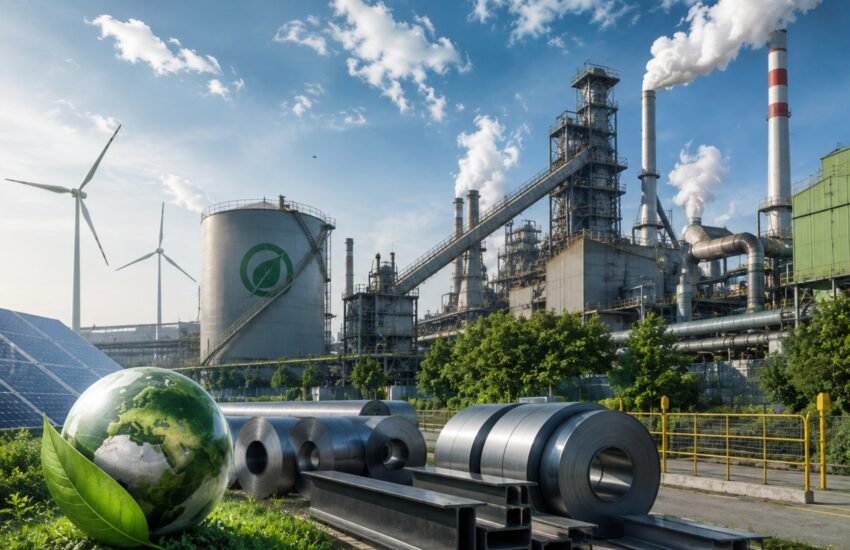
The iron and steel industry is one of the most important sectors supporting global economic development. Steel is essential for construction, infrastructure, automobiles, machinery, energy systems, and manufacturing. However, steel production is also highly energy-intensive and generates significant Carbon Emissions, making Carbon Footprint Reduction a major priority for the industry.
Decarbonization is becoming a core element of the industry’s long-term Energy Transition, with companies working toward lower-carbon and eventually Carbon Neutral steel production.
Understanding the Carbon Footprint of the Steel Industry
The Carbon Footprint of an iron and steel company includes greenhouse gas emissions generated throughout its operations and value chain. These emissions are commonly categorized into Scope 1, Scope 2, and Scope 3.
Scope 1 Emissions are direct emissions generated from sources controlled by the steel manufacturer. These include emissions from blast furnaces, coke ovens, reheating furnaces, boilers, and other industrial processes. In traditional steelmaking, the reduction of iron ore using coke and coal is a major source of direct emissions.
Scope 2 Emissions are indirect emissions associated with purchased electricity, steam, heating, or cooling. Steel plants often consume substantial amounts of electricity, particularly electric arc furnace operations, rolling mills, finishing processes, and material handling systems.
Scope 3 Emissions occur throughout the wider value chain. They may include emissions from raw-material extraction, transportation, purchased goods and services, logistics, employee commuting, product distribution, and the downstream use or processing of steel products.
Understanding all three categories provides manufacturers with a more complete picture of their environmental impact.
Energy Efficiency as a Foundation for Carbon Reduction
Improving energy efficiency is one of the most immediate opportunities for Carbon Footprint Reduction in steel manufacturing. Steel plants can reduce energy consumption through process optimization, waste-heat recovery, efficient motors, improved insulation, advanced combustion systems, and digital energy-management systems. Modern process-control systems can also optimize fuel consumption and production parameters.
Reducing energy consumption not only lowers Carbon Emissions but can also improve operational efficiency and reduce production costs.
Renewable Energy and Clean Energy in Steel Production
The transition toward Renewable Energy is another important pathway for steel manufacturers. Solar and wind power can reduce emissions associated with purchased electricity and support the industry’s shift toward Clean Energy.
Electric Arc Furnace (EAF) steelmaking can particularly benefit from low-carbon electricity because electricity represents a significant part of its energy requirements. Procuring renewable electricity through power purchase agreements, installing solar projects, or purchasing renewable energy certificates can help manufacturers reduce their Scope 2 Emissions.
As renewable electricity becomes more available, combining EAF technology with high-quality scrap steel and clean electricity can provide a pathway toward significantly lower-carbon steel production.
Transforming Primary Steelmaking Through Decarbonization
The most significant challenge lies in reducing emissions from traditional blast furnace-basic oxygen furnace steelmaking.
Several emerging technologies could support industrial Decarbonization. These include hydrogen-based direct reduced iron, carbon capture and storage, carbon capture and utilization, increased use of scrap, and alternative ironmaking technologies.
Hydrogen-based direct reduction is attracting considerable attention because hydrogen can potentially replace carbon-intensive reducing agents in certain production processes. When hydrogen is produced using renewable electricity, it can significantly reduce the carbon intensity of iron production.
Carbon capture technologies may provide another option for reducing emissions from existing facilities, particularly where complete process transformation is technically or economically challenging.
Building a Green Supply Chain
Steel manufacturers cannot achieve meaningful emissions reductions by focusing only on their own factories. Raw materials, logistics, suppliers, and customers can all influence the industry’s overall environmental impact.
A Green Supply Chain approach can include responsible sourcing of iron ore, low-carbon raw materials, recycled scrap, efficient transportation, sustainable packaging, and supplier emissions monitoring.
Addressing Supply Chain Emissions is especially important for Scope 3 Emissions. Steel companies can work with mining companies, logistics providers, equipment suppliers, and other partners to establish emissions-reduction targets.
Digital platforms can help manufacturers collect supplier emissions data, assess carbon intensity, identify high-emission suppliers, and track improvements over time.
Carbon Credits and Carbon Offsets
Direct emissions reduction should remain the primary focus, but Carbon Credits and a Carbon Offset strategy may have a role in addressing residual emissions.
Steel companies should first prioritize energy efficiency, renewable power, process innovation, electrification, hydrogen, recycling, and other direct reduction measures. For emissions that remain difficult to eliminate, high-quality carbon credits may potentially be used as a complementary measure.
Organizations should carefully assess the credibility, verification, additionality, permanence, and transparency of carbon projects before relying on offsets as part of their climate strategy.
Sustainability Reporting and ESG Reporting
As sustainability expectations increase, steel manufacturers are placing greater emphasis on transparent environmental disclosures.
Sustainability Reporting enables companies to communicate their environmental performance, energy consumption, greenhouse gas emissions, resource use, and climate initiatives. ESG Reporting provides a broader view of environmental, social, and governance performance.
Accurate measurement of Scope 1, Scope 2, and Scope 3 emissions is essential for credible reporting. Steel companies should establish robust systems for collecting and validating emissions data across production facilities and supply chains.
Effective reporting can also support ESG Compliance by helping organizations respond to applicable regulatory requirements, customer expectations, investor requests, and supply-chain disclosure requirements.
The Road to Carbon Neutral Steel
The long-term goal for many steel manufacturers is to develop increasingly low-carbon production systems and ultimately achieve Carbon Neutral operations or net-zero emissions.
A practical pathway can include:
- Measuring the company’s complete Carbon Footprint.
- Establishing Scope 1, Scope 2, and Scope 3 emissions baselines.
- Improving energy efficiency across production facilities.
- Increasing Renewable Energy and Clean Energy procurement.
- Expanding the use of recycled scrap.
- Adopting EAF technology where appropriate.
- Exploring hydrogen-based direct reduction.
- Implementing carbon capture technologies where feasible.
- Developing a Green Supply Chain.
- Reducing Supply Chain Emissions through supplier engagement.
- Using credible Carbon Credits for appropriate residual emissions.
- Strengthening Sustainability Reporting and ESG Reporting systems.
Conclusion
The iron and steel industry is entering a critical phase of transformation. As demand for sustainable materials grows, manufacturers must address emissions across production facilities and the broader value chain.
Carbon Footprint Reduction will require a combination of energy efficiency, Renewable Energy, Clean Energy, recycling, hydrogen, electrification, carbon capture, responsible sourcing, and supply-chain collaboration.
The industry’s Energy Transition will not happen through one technology alone. Instead, a combination of proven solutions and emerging technologies will be required to achieve deep Decarbonization.
Companies that begin measuring their emissions today and integrate carbon reduction into their operational and investment decisions will be better positioned to meet evolving customer expectations, strengthen ESG Compliance, improve competitiveness, and contribute to a more sustainable industrial economy.
The future of steel will depend not only on how much steel the industry produces, but also on how sustainably it is produced.