For Indian businesses, climate action is increasingly moving beyond corporate social responsibility. Customers, investors, financial institutions, regulators, international buyers, and supply-chain partners are placing greater emphasis on environmental performance. As a result, Carbon Footprint Reduction is becoming an important factor in determining how companies compete, access capital, enter international markets, and build long-term resilience. India’s economic growth story is closely linked to its rising demand for energy, infrastructure, mobility, and industrial production. As businesses expand and cities grow, the country is experiencing increasing demand for electricity, transportation, construction materials, manufactured goods, and digital infrastructure. This growth is creating new economic opportunities, but it is also increasing the urgency of managing Carbon Emissions.
India’s approach to climate action is therefore evolving from isolated environmental initiatives toward a broader transformation of the economy. This transformation involves renewable power, energy efficiency, cleaner technologies, sustainable manufacturing, green infrastructure, and responsible resource management.
India’s Changing Carbon Footprint
India’s emissions profile reflects the scale and diversity of its economy. Electricity generation, industrial manufacturing, transportation, buildings, agriculture, and waste all contribute to the country’s overall emissions.
The challenge is particularly complex because India must simultaneously pursue economic development and environmental sustainability. Expanding manufacturing capacity and infrastructure is essential for employment and economic growth, yet these activities require significant quantities of energy and raw materials.
This makes accurate emissions measurement an essential starting point for businesses.
Scope 1 Emissions represent direct emissions from sources controlled by an organization. These may include fuel burned in industrial equipment, boilers, furnaces, captive power generation, and company-owned transportation.
Scope 2 Emissions result from the consumption of purchased electricity, steam, heating, or cooling. For Indian companies, shifting electricity procurement toward renewable sources can be an effective way to address this category.
The most complex area is Scope 3 Emissions, which arise from activities throughout the wider value chain. These can include raw material production, supplier operations, logistics, employee commuting, business travel, waste treatment, product distribution, and the downstream use of products.
Understanding all three categories enables organizations to identify where their greatest opportunities for Carbon Footprint Reduction actually exist.
Renewable Energy as a Catalyst for Change
The expansion of Renewable Energy is reshaping India’s energy ecosystem. Solar and wind projects are expanding the availability of lower-carbon electricity, while emerging technologies are creating new opportunities for decentralized and distributed generation.
For companies, renewable power can be integrated into operations through rooftop solar installations, open-access procurement, power purchase arrangements, and other suitable mechanisms.
The benefits extend beyond emissions reduction. Renewable energy can provide organizations with greater visibility over long-term energy costs and reduce exposure to fluctuations in conventional fuel markets.
The growth of Clean Energy is also creating an ecosystem of new industries. Battery manufacturing, energy storage, green hydrogen, electric mobility, power electronics, and smart-grid technologies are emerging as important components of India’s evolving energy landscape.
This shift represents an Energy Transition in which energy generation and consumption are gradually being redesigned around efficiency, electrification, and lower-carbon technologies.
Transforming Indian Manufacturing
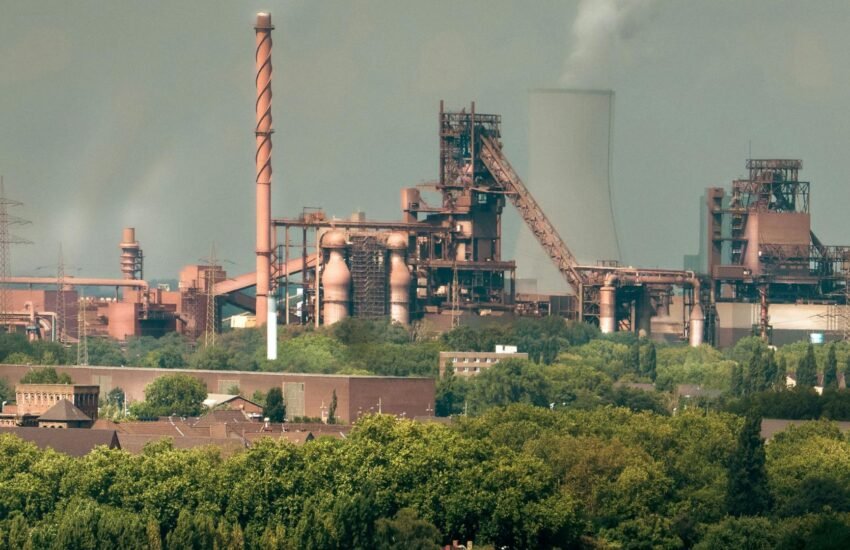
Manufacturing will be central to India’s future economic growth. At the same time, industrial facilities can have substantial energy and material requirements.
The path toward industrial Decarbonization therefore requires organizations to rethink how products are designed, manufactured, transported, and consumed.
Factories can begin by identifying high-energy processes and implementing targeted efficiency improvements. High-efficiency motors, variable-frequency drives, automated controls, waste heat recovery, improved insulation, and energy monitoring systems can help reduce energy intensity.
Process innovation is equally important. Industries can explore electrification, alternative fuels, material substitution, recycling, and circular production models.
For sectors such as steel, cement, chemicals, fertilizers, and refining, the transition may require more advanced solutions. Green hydrogen, alternative feedstocks, carbon capture, low-carbon process technologies, and greater use of renewable electricity could become increasingly relevant.
The goal is not simply to reduce emissions per facility but to gradually lower the carbon intensity of entire industrial value chains.
Building a Green Supply Chain
Indian businesses increasingly operate within global supply networks. A company’s environmental performance can therefore be influenced by suppliers located several stages away from its own operations.
This makes Supply Chain Emissions a critical component of corporate climate strategy.
Organizations can begin by mapping their supply chains and identifying suppliers with high energy or emissions intensity. Procurement teams can then incorporate environmental criteria into supplier selection and evaluation.
A Green Supply Chain approach may involve sourcing recycled materials, selecting lower-carbon products, optimizing freight movement, reducing packaging, improving warehouse efficiency, and encouraging suppliers to adopt renewable energy.
Digital supply-chain platforms can also improve emissions visibility by allowing companies to collect environmental information from suppliers and track performance over time.
This approach is particularly important for Indian companies participating in international markets, where customers increasingly expect evidence of environmental performance throughout the supply chain.
Climate Action and India’s Export Competitiveness
Global trade is increasingly influenced by environmental requirements. Indian exporters supplying international customers may face growing expectations regarding product-level emissions, supply-chain transparency, and environmental disclosures.
As global markets move toward lower-carbon production, companies with strong emissions data and credible reduction programs may have an advantage.
Measuring a company’s Carbon Footprint can therefore become more than a sustainability exercise. It can help businesses understand their exposure to future environmental requirements and identify opportunities to improve resource efficiency.
Organizations that delay climate action may eventually face higher costs when customers, investors, or regulatory frameworks demand faster emissions reductions.
Carbon Credits and the Role of Carbon Footprint
The development of carbon markets is creating new possibilities for Indian businesses. Carbon Credits can provide a financial mechanism for supporting verified emission reduction and removal activities.
Companies may participate in carbon markets through eligible projects or purchase credits to address emissions that cannot immediately be eliminated.
However, carbon markets should complement—not replace—direct emissions reduction.
A credible climate strategy should first focus on reducing emissions through energy efficiency, renewable electricity, process improvements, and cleaner technologies. A Carbon Offset may then be considered for genuinely residual emissions.
Businesses seeking to become Carbon Neutral should clearly define their emissions boundary and explain how reductions and offsets contribute to their overall climate strategy.
The credibility of such claims depends on transparent accounting, robust verification, and high-quality carbon projects.
Sustainability Reporting Becomes a Strategic Tool
Climate performance is becoming increasingly visible to stakeholders. Investors want to understand exposure to climate risks, customers are evaluating sustainable suppliers, and financial institutions are increasingly considering environmental performance in decision-making.
This is increasing the importance of Sustainability Reporting.
Indian companies are strengthening disclosures related to energy consumption, emissions, water, waste, resource efficiency, and climate-related initiatives. ESG Reporting allows businesses to present their environmental, social, and governance performance in a structured manner.
For companies, this information can also improve internal decision-making. Once emissions data is measured consistently, management can identify inefficient assets, compare facilities, establish reduction targets, and monitor progress.
Effective ESG Compliance should therefore be viewed as part of a broader management system rather than simply a reporting requirement.
Financing India’s Low- Carbon Footprint
The transition toward a lower-carbon economy will require significant investment. Businesses need capital to modernize factories, install renewable energy systems, upgrade equipment, develop cleaner products, and improve supply chains.
Climate-related financing is becoming increasingly relevant in this environment. Companies with measurable environmental targets and credible sustainability strategies may be better positioned to engage with investors and financial institutions focused on responsible investment.
At the same time, organizations must ensure that environmental claims are supported by reliable data. Transparent measurement and credible reporting are essential for building confidence among capital providers.
Beyond Offsets: Reducing Emissions at the Source
India’s climate journey will ultimately depend on actual reductions in emissions intensity.
Offsets and carbon credits may have a supporting role, but the most durable progress comes from changing the underlying systems that generate emissions.
This means increasing renewable electricity, improving industrial productivity, electrifying transportation, reducing material waste, improving buildings, developing circular production systems, and creating more efficient logistics networks.
The transition also requires collaboration. Large companies can influence suppliers, financial institutions can support cleaner investments, technology companies can enable measurement, and policymakers can create frameworks that encourage innovation.
The Road Ahead for India
India’s path toward a lower-carbon economy presents both a challenge and an opportunity. The country must continue expanding economic activity while reducing the environmental intensity of that growth.
For businesses, the most effective response is to integrate climate action directly into strategic planning.
Organizations can begin by measuring Scope 1 Emissions, Scope 2 Emissions, and Scope 3 Emissions; identifying major sources of Carbon Emissions; increasing Renewable Energy adoption; improving operational efficiency; engaging suppliers; and establishing measurable Carbon Footprint Reduction targets.
Over time, these actions can create a more resilient business model while supporting India’s wider climate objectives.
The transition toward a low-carbon India is not expected to happen through a single technology or policy. It will emerge from thousands of decisions made by businesses, industries, investors, consumers, and communities.
By combining Clean Energy, industrial Decarbonization, Green Supply Chain practices, transparent Sustainability Reporting, and responsible climate finance, Indian organizations can turn environmental responsibility into a source of innovation and competitiveness.
The future of India’s economy will increasingly depend on its ability to grow efficiently while reducing its Carbon Footprint. Companies that begin this journey early will be better prepared for changing markets, evolving ESG expectations, and the global Energy Transition—and will be in a stronger position to contribute to a more sustainable and climate-resilient India.